BREAKING NEWS 🧠 TechSage Hardware Analyst The Strategic Roadmap for Amazon’s Fallout Franchise Following the significant market penetration of the initial seasons, the Fallout television adaptation has solidified its position as a cornerstone of Amazon MGM Studios' digital strategy. The Season 2 finale has introduced a pivotal shift in the narrative trajectory by teasing a primary location for Season 3 that has remained largely unexplored within the interactive medium of the Bethesda Softworks game library. For industry observers and technical analysts, this move represents more than a narrative flourish; it is a calculated expansion of the Fallout Intellectual Property (IP) designed to decouple the show’s success from existing game lore while maintaining brand cohesion. Read Also: Strategic Content Expansion: Analyzing the Xbox Game Pass February Early-Month Lineu...
BREAKING NEWS
🧠
TechSage
Hardware Analyst
The Strategic Deployment of Highguard’s 5v5 Limited-Time Mode
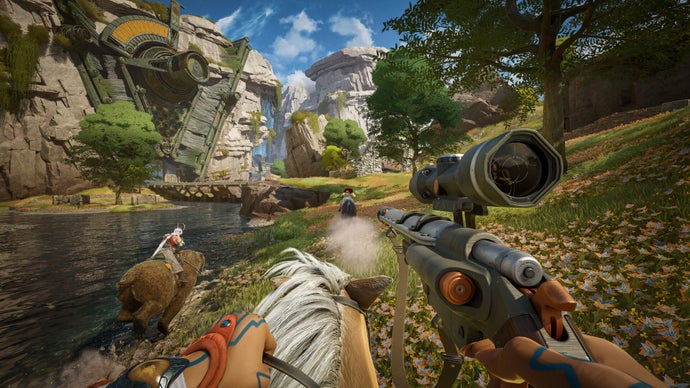
Wildlight has officially initiated a tactical update to its live-service hero shooter, Highguard, by introducing a 5v5 limited-time mode (LTM). This specific update, while brief in duration, represents a significant data-gathering exercise for the studio. Available exclusively over this weekend, the shift from the title's standard format to a 5v5 configuration suggests a rigorous assessment of game balance, network performance, and player engagement metrics. From a technical perspective, reducing or altering player counts per match directly impacts server tick rates, latency compensation, and the overall spatial dynamics of existing maps.
Read Also: Sony’s Handheld Roadmap: Analyzing the 2026 OLED Refresh and the RDNA 5 Powered PS6 Portable
Technical Specifications and Tactical Adjustments
The 5v5 LTM is not merely a reduction in player count; it is an overhaul of the game's competitive ecosystem. In a hero shooter, the removal or addition of even a single player per team fundamentally alters the Time-to-Kill (TTK) and the utility value of support-class characters. Wildlight’s decision to run this as a weekend-only event indicates a desire to maximize peak concurrency (CCU) to stress-test the matchmaking algorithms under high-load conditions. By compressing the testing window, the developers ensure a concentrated pool of data that is easier to analyze for statistical significance.
Furthermore, the 5v5 structure aligns Highguard more closely with industry standards established by competitors like Valorant and Overwatch 2. This move could be interpreted as a market-driven recalibration. The 5v5 format typically allows for clearer visual feedback during high-intensity skirmishes, reducing the 'visual noise' that often plagues 6v6 or larger team formats. For professional players and the burgeoning esports scene surrounding Highguard, this weekend serves as a proof-of-concept for potential permanent league structures.
TechSage’s Take: Business Impact and Infrastructure Analysis
From an analytical standpoint, Wildlight is leveraging the 'Scarcity Principle' to drive short-term retention. By making the mode available for only 48 to 72 hours, they create an artificial urgency that forces the player base to engage immediately. This provides the QA and engineering teams with a high-density dataset regarding hero win rates and map heatmaps. If the data suggests that 5v5 improves match flow and reduces server-side overhead, we should expect a permanent transition within the next two fiscal quarters.
There is also the matter of Server Infrastructure Optimization. Managing 10 players per instance instead of the previous standard can lead to substantial savings in compute costs at scale. In the current economic climate for live-service games, operational efficiency is as critical as gameplay innovation. If Wildlight can maintain player satisfaction while reducing the hardware resources required per match, the long-term viability of Highguard increases significantly. However, the risk remains that the current maps, designed for a different player density, may feel 'empty' or lead to prolonged periods of inactivity between engagements, which could negatively impact player sentiment if not addressed through environmental tweaks.
The Competitive Landscape and Future Outlook
Wildlight is currently navigating a saturated market. The hero shooter genre demands constant iteration to prevent player churn. This weekend's update is a low-risk, high-reward method of A/B testing. By isolating the 5v5 mode as an LTM, they avoid alienating the core player base that prefers the original format, while simultaneously courting the more 'hardcore' competitive demographic that favors the 5v5 tactical depth.
We must also consider the Network Topography. Updates of this nature often include backend optimizations for netcode. If players report a 'smoother' experience this weekend, it may not just be the reduced player count, but rather a deployment of new packet-handling protocols. Industry observers should watch the post-weekend patch notes closely; the absence of a revert or a rapid follow-up survey will indicate how successful this technical pivot was for Wildlight's internal KPIs.
Conclusion
Highguard’s 5v5 weekend is a calculated maneuver in live-service management. It balances the need for technical optimization with the necessity of fresh content. While the immediate focus for players is the new gameplay dynamic, the underlying reality is a sophisticated stress test of Wildlight’s infrastructure and a strategic alignment with global esports standards. Whether this remains a fleeting experiment or becomes the new foundation for Highguard will depend entirely on the telemetry gathered over the next 48 hours.
🏆 Gamer Verdict
7.5/10 HYPE
"A calculated technical trial that aligns the game with competitive standards, though the limited window may frustrate casual players."
✅ The Good
- Improved tactical clarity and reduced visual noise.
- Optimized server-side performance potential.
❌ The Bad
- Extremely limited availability creates unnecessary FOMO.
- Potential for map imbalance due to reduced player density.
🌍 Global Quick Take
🇮🇳 Hindi: वाइल्डलाइट ने हाईगार्ड के लिए एक नया 5v5 मोड पेश किया है, जो केवल इस सप्ताह के अंत में उपलब्ध होगा।
🇪🇸 Spanish: Wildlight ha implementado un nuevo modo 5v5 por tiempo limitado para Highguard, disponible únicamente este fin de semana.
Tags: #Highguard #Wildlight #Live-Service #Esports #GameDevelopment #5v5Mode
Stay tuned for more gaming updates! Subscribe to our feed.
Source: Read Original Article
Comments
Post a Comment