BREAKING NEWS 🧠 TechSage Hardware Analyst The Mechanics of a Comeback: FURIA’s Resilience in Cluj-Napoca In the high-stakes environment of the PGL Cluj-Napoca 2026 Major , the second round of the Opening Stage has already provided a definitive case study in mental fortitude and tactical recalibration. FURIA , the Brazilian powerhouse, secured a pivotal second-round victory following a performance that transitioned from a technical deficit to a masterclass in mid-game adaptation. From a professional standpoint, this match was not merely a display of individual skill but a demonstration of how optimized utility usage and economic management can override an initial disadvantage in the server. Read Also: PGL Cluj-Napoca 2026: A 'Thriller' or Just a Glorified Clown Fiesta? The match began with FURIA struggling to find their footing against a disciplined defensive l...
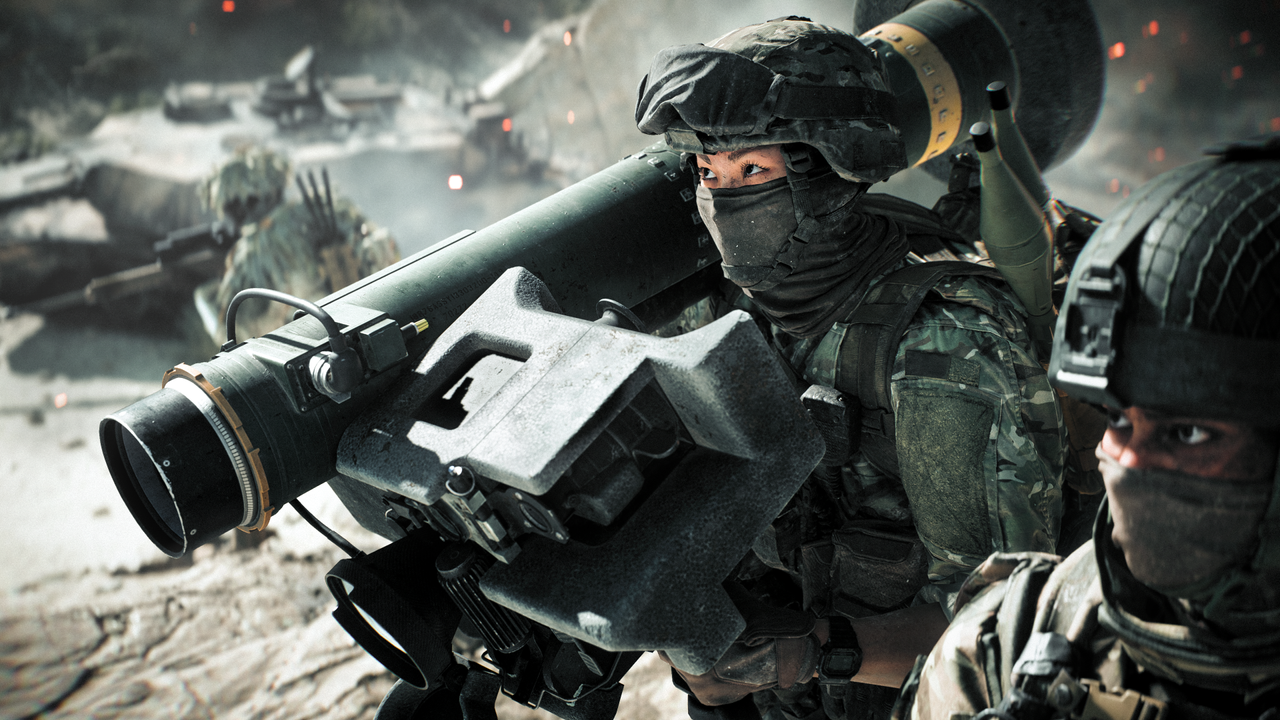
EA Strategically Delays Battlefield Season 2: A Technical and Business Analysis of the Pursuit for 'Polish'
BREAKING NEWS
🧠
TechSage
Hardware Analyst
The Strategic Pivot: Quality Over Cadence
In the contemporary landscape of Triple-A live-service gaming, the pressure to maintain a rigid content release cycle often clashes with the technical realities of software stability. Electronic Arts (EA) has recently announced a one-month delay for the upcoming season of the latest Battlefield entry, specifically citing the need to 'further polish and refine Season 2.' From a business perspective, this move signals a pivot in EA's strategy—prioritizing long-term player retention and brand equity over immediate quarterly engagement metrics. For a franchise that has faced significant scrutiny regarding its launch-state performance, this additional month is not merely a buffer; it is a critical window for technical debt repayment.
Read Also: Technical Analysis: Capcom Schedules Resident Evil Showcase for January 15
Technical Specifications and Development Hurdles
The decision to delay suggests that the 'polish' required extends beyond simple bug fixes. Battlefield’s proprietary Frostbite engine is renowned for its complex environmental destruction and high-fidelity physics, both of which demand significant CPU overhead and server-side synchronization. To achieve the 'bigger maps' and potential 'naval warfare' demanded by the community, the development team must ensure that asset streaming and netcode are optimized to prevent packet loss and frame-time inconsistencies. In a 128-player environment (or even high-density 64-player maps), the introduction of maritime assets—which require dedicated buoyancy physics and complex hit-box detection—adds a layer of computational complexity that can destabilize a build if not rigorously tested.
- Engine Optimization: Refinement of shader compilation and memory management to reduce stuttering on mid-range hardware.
- Infrastructure Scalability: Ensuring that regional servers can handle the increased data throughput associated with larger, more complex map geometries.
- Balance Tuning: Iterative testing of vehicle-to-infantry combat loops, particularly if naval assets are introduced.
The TechSage Perspective: Business Impact and Market Positioning
From an industry standpoint, EA is operating in an increasingly crowded FPS market. With competitors like Activision-Blizzard and burgeoning tactical shooters vying for the same demographic, Battlefield cannot afford another 'sub-optimal' content drop. The cost of player churn—the rate at which users abandon a game—is significantly higher than the cost of a thirty-day delay. By taking this time, EA is attempting to stabilize the Average Revenue Per User (ARPU) by ensuring the Season 2 Battle Pass is supported by a stable, high-performance client. Furthermore, the mention of 'bigger maps' suggests a return to the franchise's core identity, which is essential for reclaiming the 'hardcore' audience that drives long-term ecosystem viability.
Naval warfare, while technically demanding, represents a significant 'feature-plus' that could serve as a powerful marketing tool for the mid-cycle refresh. If the delay allows for the successful implementation of multi-theater combat (land, air, and sea), the ROI on this additional month of development will be realized through renewed player interest and positive sentiment shift. However, the technical execution must be flawless; in the current market, 'polish' is no longer a luxury—it is a baseline requirement for survival.
Conclusion: A Necessary Recalibration
In conclusion, while a delay is rarely welcomed by the consumer base, it is the most logical path for EA to protect the Battlefield IP. The focus on refinement suggests a move toward architectural stability that could pave the way for more ambitious content in the future. Whether this month of development yields the 'bigger maps' and 'naval warfare' that enthusiasts crave remains to be seen, but from a technical and business standpoint, the trade-off is essential for the franchise's longevity.
🏆 Gamer Verdict
6.5/10 HYPE
"A calculated delay that prioritizes technical stability over immediate release, essential for long-term IP health."
✅ The Good
- Reduced risk of game-breaking bugs at launch.
- Potential for more complex, large-scale map designs.
❌ The Bad
- Short-term content drought may lead to temporary player churn.
- Increased pressure for the final product to be flawless.
🌍 Global Quick Take
🇮🇳 Hindi: ईए ने बैटलफील्ड के अगले सीजन में एक महीने की देरी की है ताकि तकनीकी सुधार और गेमप्ले को बेहतर बनाया जा सके।
🇪🇸 Spanish: EA ha retrasado la próxima temporada de Battlefield un mes para pulir el rendimiento técnico y mejorar la experiencia de juego.
Tags: #Battlefield #ElectronicArts #GameDevelopment #FrostbiteEngine #LiveService #TechAnalysis
Stay tuned for more gaming updates! Subscribe to our feed.
Source: Read Original Article
Comments
Post a Comment