BREAKING NEWS 🧠 TechSage Hardware Analyst The Mechanics of a Comeback: FURIA’s Resilience in Cluj-Napoca In the high-stakes environment of the PGL Cluj-Napoca 2026 Major , the second round of the Opening Stage has already provided a definitive case study in mental fortitude and tactical recalibration. FURIA , the Brazilian powerhouse, secured a pivotal second-round victory following a performance that transitioned from a technical deficit to a masterclass in mid-game adaptation. From a professional standpoint, this match was not merely a display of individual skill but a demonstration of how optimized utility usage and economic management can override an initial disadvantage in the server. Read Also: PGL Cluj-Napoca 2026: A 'Thriller' or Just a Glorified Clown Fiesta? The match began with FURIA struggling to find their footing against a disciplined defensive l...
Finally, A Trip To California That Doesn't Involve Stepping Over A Tech Bro: The Computer History Museum Goes Virtual
BREAKING NEWS
💀
Rogue
The Skeptic
The 'Innovation' of Looking at Old Crap from Your Couch
Look, I get it. You were planning on spending your life savings on a flight to Mountain View just to see a Xerox Alto and smell the faint, lingering scent of unwashed genius and venture capital. But thanks to the Computer History Museum (CHM), you can now save that money for... well, definitely not a pre-order of the next broken 'Aaaa' title. They’ve opened up their massive collection of digital artifacts for the public to view online. It’s like a graveyard for ideas that actually worked, unlike the 'live service' roadmap of your favorite shooter.
For those of you who think 'retro' means the PS4, buckle up. We’re talking about punch cards, vacuum tubes, and source code that was written by people who didn't have the luxury of a 100GB day-one patch to fix their incompetence. The CHM is basically the Smithsonian for people who know what a floppy disk actually did (no, it’s not just the 'save' icon, you sweet summer child).
The Details: What’s Actually in the Digital Attic?
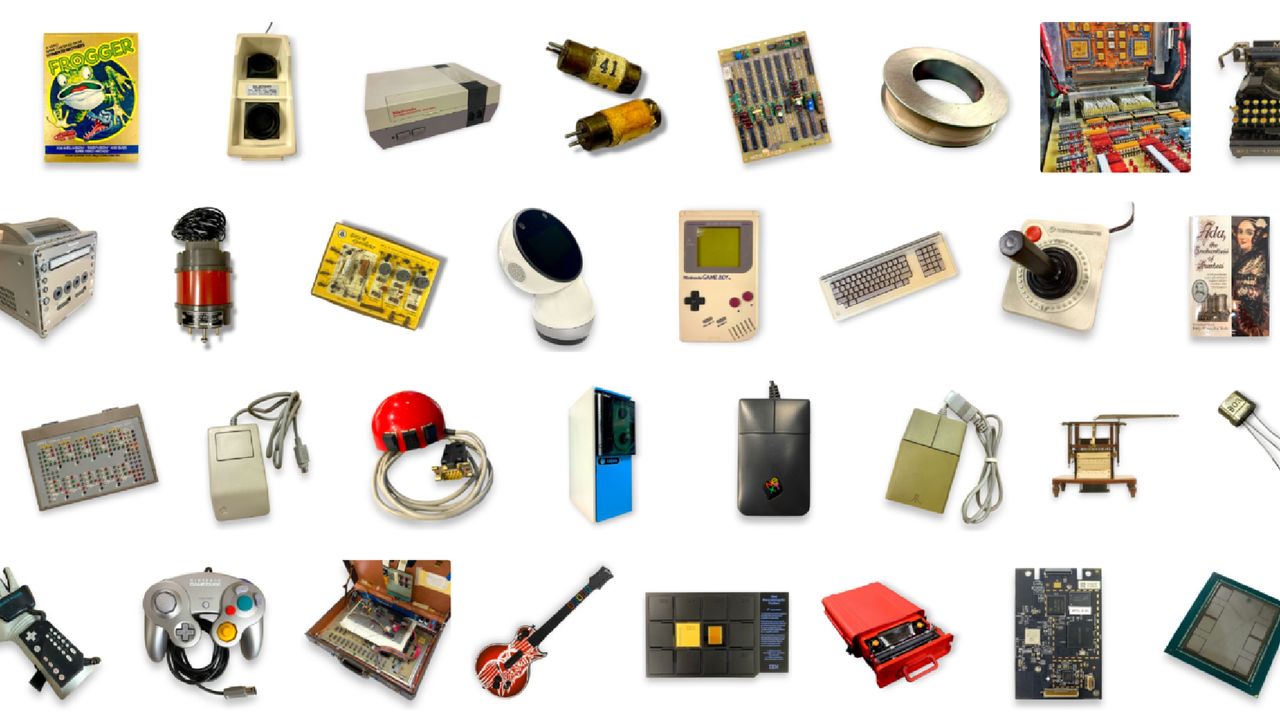
The online collection isn't just a bunch of blurry JPEGs of old calculators. They’ve digitized a staggering amount of history. We’re talking about thousands of artifacts, from the earliest mainframes that took up entire rooms just to do basic math, to the personal computer revolution that eventually led to us arguing with strangers on the internet. You can browse through:
- Source Code: Actual, readable code from legendary software like Photoshop 1.0 and Apple II DOS. It’s terrifyingly clean compared to the spaghetti code running modern launchers.
- Oral Histories: Videos of the pioneers who built this stuff before it was cool and profitable to be a nerd.
- Hardware Specs: Documentation for machines that had less processing power than your smart toaster but somehow managed to put people on the moon.
- The 'Software' Gallery: A look at how we went from literal switches to the bloated UI nightmares we endure today.
Rogue’s Take: A Reality Check for the Modern Gamer
Why should you care? Because looking at a Cray-1 supercomputer reminds us of a time when 'performance' meant something other than 'how many frames can we drop before the player notices?' There is a profound irony in viewing these masterpieces of engineering through a modern web browser that probably uses more RAM just to display a GIF than the entire Apollo 11 guidance computer had in its entire existence. We have peaked, and by 'peaked,' I mean we’ve become incredibly efficient at wasting massive amounts of power on microtransactions.
The most refreshing thing about the CHM’s online collection is the lack of a 'Battle Pass.' I scrolled through the history of the IBM 360 for twenty minutes and not once did a pop-up ask me if I wanted to buy a 'Legendary Skin' for a punch card reader. It’s a museum of actual progress, which feels alien in an industry currently obsessed with 'reimagining' games from five years ago because they ran out of original thoughts. It’s a reminder that computers used to be tools for expansion, not just high-priced delivery systems for digital gambling.
And let’s talk about that 'Don't Pre-order' energy. This museum is the ultimate proof that good things take time and that the first version of something is rarely the best, but at least it was finished. When the Apple I launched, Steve Wozniak didn't promise a 'Roadmap for 1977' that included basic features like 'keyboard support' six months after launch. It worked. It was a slab of wood and circuits, and it did exactly what it said on the tin. If only modern publishers had half the integrity of a 1970s hobbyist in a garage.
Conclusion: Put Down the Controller and Pick Up a History Lesson
If you have any interest in how we got to this point—where we pay $70 for a digital license we don't even own—you owe it to yourself to check out the CHM’s online archives. It’s free, it’s educational, and it’s a great way to kill an hour while you wait for your 60GB 'stability update' to download. Just don't get too depressed when you realize that software from 1985 was often more stable than the 'Beta' you’re currently paying to test for a billion-dollar corporation.
Go look at the PDP-1. Marvel at the Spacewar! code. Then come back to the present and try not to cry when you realize your RGB-lit gaming rig is mostly being used to run a browser that tracks your data to sell you more stuff you don't need. The past was beige, it was clunky, and it was glorious. Stay cynical, friends.
🏆 Gamer Verdict
4/10 HYPE
"It's a museum, not a hype-train, but it's the only thing this week that isn't trying to steal your credit card info."
✅ The Good
- Zero microtransactions to view the ENIAC.
- Doesn't require a 4090 to run a browser.
❌ The Bad
- Reminds you how much better software used to be.
- No 'Skip Intro' button for human history.
🌍 Global Quick Take
🇮🇳 Hindi: अब आप घर बैठे कंप्यूटर इतिहास संग्रहालय देख सकते हैं, जो पुराने गैजेट्स और ऐतिहासिक कोड से भरा है।
🇪🇸 Spanish: Ahora puedes explorar la colección del Museo de Historia de la Computación desde tu casa, llena de reliquias tecnológicas.
Tags: #RetroGaming #ComputerHistory #TechCynicism #GamingCulture #CHM
Stay tuned for more gaming updates! Subscribe to our feed.
Source: Read Original Article
Comments
Post a Comment